
-4412.avif)
Tyler Jordan Soucy is a documentary wedding photographer serving New England, New York, Los Angeles, and destinations worldwide. His documentary style wedding photography is rooted in observation, anticipation, and authenticity.
There's not just one right way to do things, and there's a perfect photographer for every couple. Some want their wedding to feel like a big production, where they can be models for a day, and that may be exactly who they are. For me, weddings are about protecting your experience of the day and prioritizing your time with the people you love.
Sometimes, as wedding professionals, we get caught up thinking our expertise and direction are central to our value. To me, that assumes I know how your wedding should look or feel based on my past experiences, or that you’re even looking for someone to step in and direct it. That’s why I lead as a photographer first.
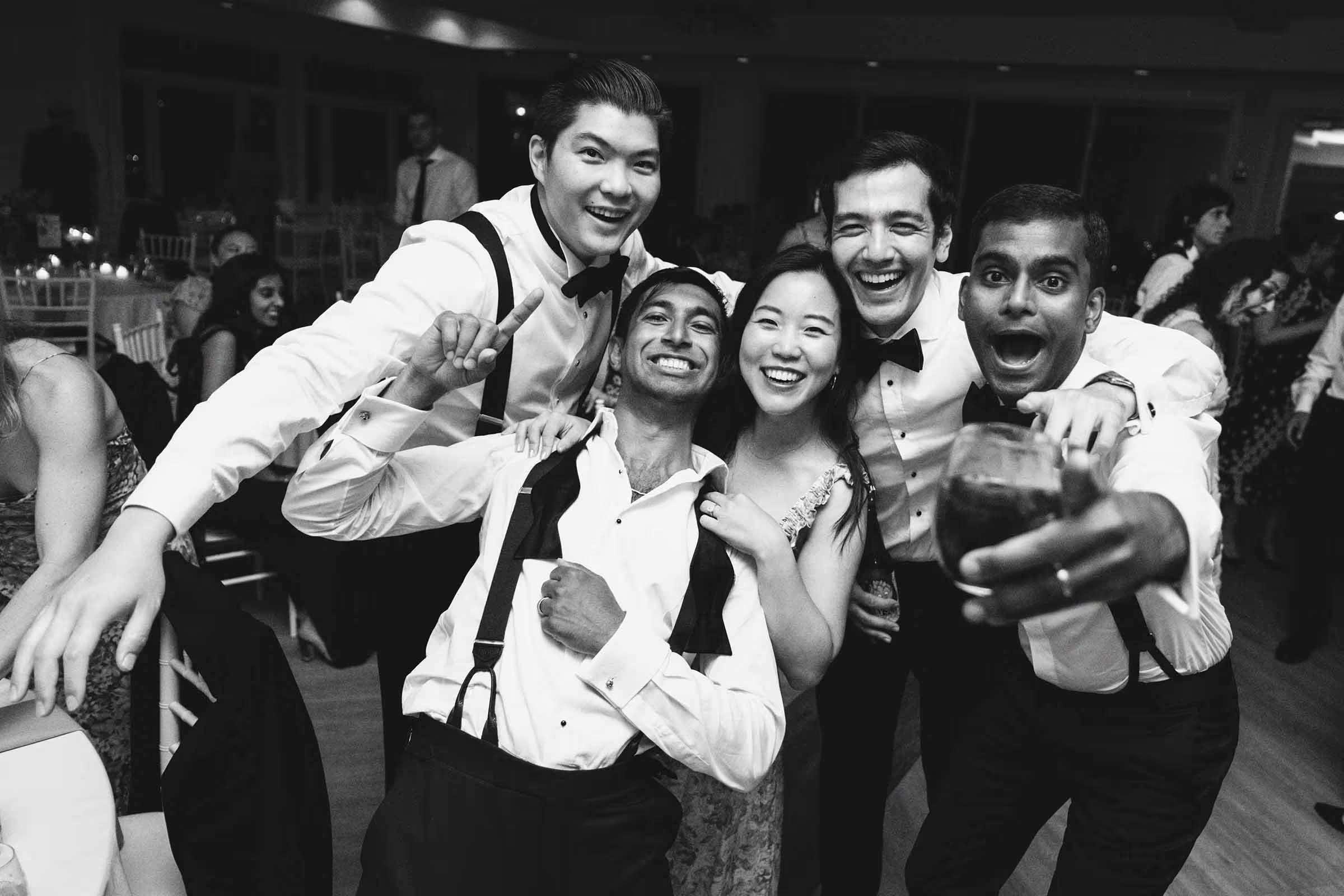
To walk this back a bit, my relationship with photography started with the film cameras my mom always had around when we were kids. Back then, I didn’t think much about the power of photography, or why my mom might even want a photo of me playing with earthworms in the backyard. I was often making an awkward face or crossing my eyes whenever she lifted the camera.
Those were the photos that hung on our walls at home. I don’t think we ever framed a single posed portrait. Now, when I look back at those candid shots from family parties or vacations, they reconnect me with parts of my childhood I would have otherwise forgotten. They bring back the full range of emotion, from unbridled joy to the quiet ache of nostalgia.
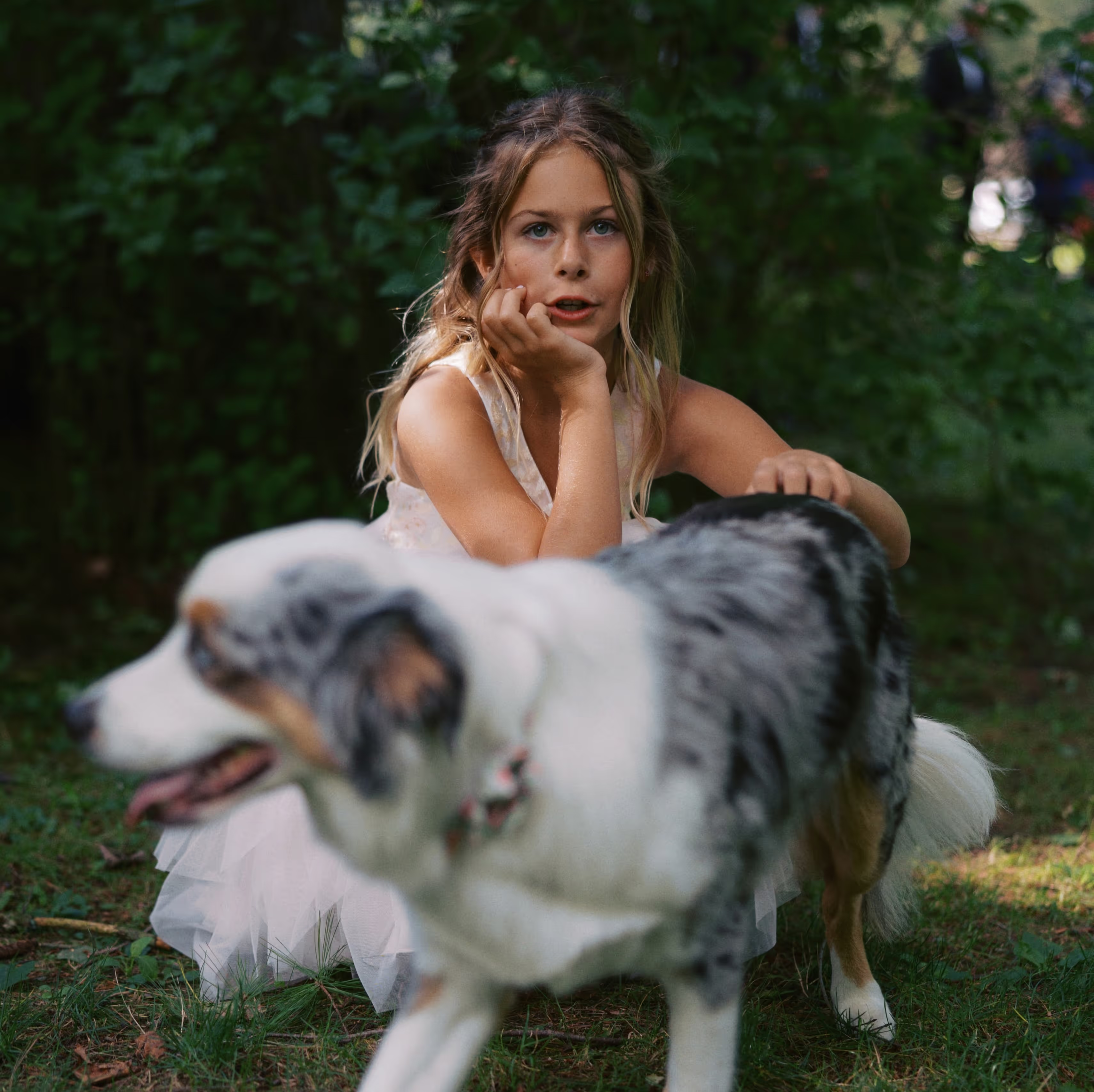
Before documenting weddings, my journey started with street photography and then behind-the-scenes work on film sets. Both sharpened my instincts for observation, anticipation, storytelling, and authenticity.
At its core, street photography is an exercise in patience, intuition, and subtlety. It teaches you to notice small shifts in body language, movement, detail, and light, things that are easy to overlook in real time. It’s where I first learned how gratifying it is to freeze a moment in time.
Film set photography taught me the power of visual storytelling, how to use composition and light to convey emotion without interrupting the flow of a scene or the larger production. Film sets are inherently performative, but the candid moments between cast and crew, and the team effort behind it all, were where the real magic was for me.

It all clicked when a production assistant on set asked me to photograph a wedding in my documentary style, referencing my street photography work. I remember replying, “You can do that?”
At the time, I didn’t know photographing weddings this way was even an option, or that the kind of images I cared about most mattered to anyone else in the space. Growing up, the weddings I attended followed a familiar structure built around the expected photos: the first kiss, the first dance, cutting the cake, the bouquet toss. Between those moments, the cameras often went down.
After that first wedding, I knew immediately this was where I wanted to be. It had all of the spontaneity and humanity I love about street photography, alongside the visual world-building and sense of community I had come to know on film sets. The emotions were raw, and I was invited in to witness that vulnerability with intention and consent.
I soon started working as a second and associate photographer for other wedding photographers to learn the ropes, but I realized I was starting to adopt more traditional habits. Ones that leaned heavily into posing, staging, and directing. I found myself trying to control the tempo of the day, cleaning up rooms, and asking couples to repeat actions, briefly buying into the idea that this was just “how it’s done.” I hit a wall. It wasn't aligned with what I loved about people, weddings, or photography.
That’s when I decided it was time to fully commit to my own path as a documentary wedding photographer.

Every wedding carries its own rhythm, a kinetic energy that builds as the day goes on. Preserving that momentum allows for something more honest to emerge.
Being photographed can feel vulnerable. Heavy direction may soften that discomfort temporarily, but it rarely removes it. With clear communication and a quieter approach, performance anxiety fades, the camera becomes part of the environment, and people can simply be themselves.
Photos are meant to celebrate individuality and evoke the memories attached to them. That’s why I don’t believe weddings should be scheduled around staged moments or performative expectations.
The terminology varies, but the philosophy stays the same: presence over performance.


